Back
The missing millions: how National Lottery operator Allwyn turned rep capability into a revenue lever it can pull
1 in 5 → 4 in 5
Reps hitting silver or gold on Allwyn's own coaching standard, in a single quarter


About

Allwyn operates The National Lottery in the UK. Its products sit in tens of thousands of shops across the country — supermarkets, petrol stations, corner shops — sold by a field team of 200 retail sales executives.
Headquarters
Watford, United Kingdom
Industry
Entertainment Providers
Employees
5,001-10,000 employees
Still have a doubt?


THE CHALLENGE
Allwyn could see which shops were failing. Not whether its reps could fix them.
There is a scratch card rack in almost every shop in Britain. The corner shop, the petrol station, the supermarket by the roundabout. One company sits behind all of it, and a field team of 200 people is responsible for every one of those racks.
They work the way field reps have always worked. Eight store visits a day. A territory. A call file that changes weekly. Long stretches of driving in between. Some of them have been doing it for twenty years.
Allwyn knew exactly which shops were underperforming. Toby Taylor-Freestone had built CityMapper, a weekly diagnosis of the entire estate — sales by game, dispenser fill, a ten-question standards audit, every store scored and segmented. The diagnosis was excellent. The distribution of it was two analysts, hand-serving a field force of 200.
So the gap sat there. Scratch card sales had drifted down over several years, and the distance between what the estate was selling and what it could sell had opened into the tens of millions of pounds a week. Allwyn could name that gap precisely. Closing it meant one thing: 200 people having a different conversation at the counter. And that was the one variable in the equation nobody could see, measure, or move.
The old tools said as much. A weekly written briefing went out to the field; reps did not read it. Routing was run off a spreadsheet that could send a rep an hour across town to reach a shop down the road. Training was a classroom and a role play with your manager, which works at ten people and stops working at two hundred. When Retail Capability Manager Laura Prince asked the field to send in the objections they were actually hearing at the counter, she wrote to 125 reps. Ten replied.
To close a gap it could measure but not move, Allwyn turned to SecondBody.
THE SOLUTION
Coaching that goes where the rep already is
Laura Prince ran it from the Allwyn side, with Toby Taylor-Freestone owning the data and Karl Southworth backing it from the top of the retail organisation.
It started as practice. Real objections from the counter, turned into scenarios reps could work through and be scored on — Allwyn's own frameworks, not ours. Thousands of practice responses came back in the first few weeks, from three quarters of the field. For the first time, capability had a number attached to it. Laura could see who was strong, who was struggling, and on what.
Then the field pushed the product where it needed to go. Allwyn's network blocked a large share of desktop sessions outright, so practice moved to the phone — which turned out to be the right answer anyway, because reps in the field do not carry laptops. The phone could only call out, so the team moved to WhatsApp to let reps talk back. And a rep with eight visits a day has two free hands for none of this, so it became voice.
That is Rory. A voice coach on WhatsApp, built on the rep's own territory data. The rep calls it before the first door of the day. Rory knows which stores are on the call file, what CityMapper says is wrong with each one, and where the numbers contradict each other — a full dispenser and no sales is a different conversation from an empty one. It gives the rep the diagnosis and the conversation that fixes it, in about four minutes, in the car park.

We're coaching 200 field reps on the road. Enablement at that scale takes real structure — that's what SecondBody gave us. And we see it in our numbers.
Laura Prince
Retail Capability Manager, Allwyn
Reps started calling before half seven in the morning without being asked.
THE IMPACT
Better conversations at the counter, and sales that move with them
Capability moved first, and it moved fast. At the start, fewer than one in five reps were hitting silver or gold against Allwyn's coaching standard. A quarter later it was more than four in five. Not a training completion rate — a measure of how well people were actually handling the conversations that sell.
Then Allwyn tested whether that showed up in the till. It ran a regional trial and watched the metrics: every one came back green. It ran a four-week trial against scratch cards and measured a clear uplift and incremental sales against a control period. On its own modelling, off its own data, Allwyn put the annual opportunity from scratch cards alone in the millions.
The cleanest read is the simplest one. Allwyn runs its field trial with two groups — reps using SecondBody and reps who are not. The ones who practise score consistently higher than the ones who do not, on the same standard, in the same territories.
There is a second change the numbers do not capture. Reps stopped being handed answers and started asking better questions. One of the most experienced reps in the trial pushed back hard on an early version of Rory that led with a data dump — he did his own prep, knew his territory, and did not want a robot doing his job. That feedback changed the product. Rory now opens by asking the rep what is on their mind. The reps lead. The tool follows.
1 in 5 → 4 in 5
Reps meeting Allwyn's silver or gold coaching standard, in one quarter
65%
Faster ramp time for new starters — 2–2.5 weeks cut from onboarding
Our team practices commercial conversations in a safe space before they hit the floor. They're sharper in live in-store interactions — and they actually enjoy it.
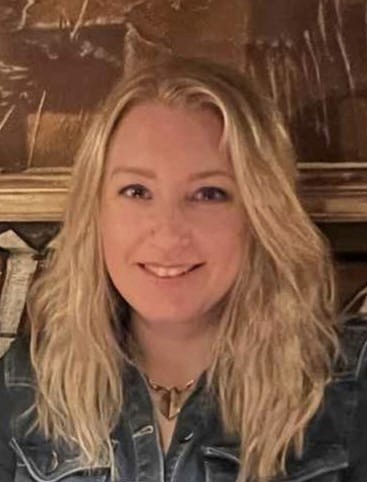
Dawn Connolly
Regional Sales Manager, Allwyn
The pattern holds across the estate. Reps who practise handle the counter differently from reps who do not, and it shows up in the standards score before it shows up in the sales line.
WHAT’S NEXT
From a trial region to the whole estate
Allwyn is taking Rory from a trial group to the full field organisation, and connecting it directly to CityMapper so the coaching updates itself as the data does. Managers get their own view: which of their reps are engaging, where capability is thin, and which stores need a conversation this week rather than next month.
The relationship holds because the data does. Allwyn trusts SecondBody with its store-level commercial picture, rep by rep, and the coaching only works because it is built on that. It is the difference between a training tool and something the field runs its morning on.
At an incentive event at the Watford office, one of Allwyn's retail leaders put a rep in front of the CEO and had him call Rory live, unannounced.
Share the Story